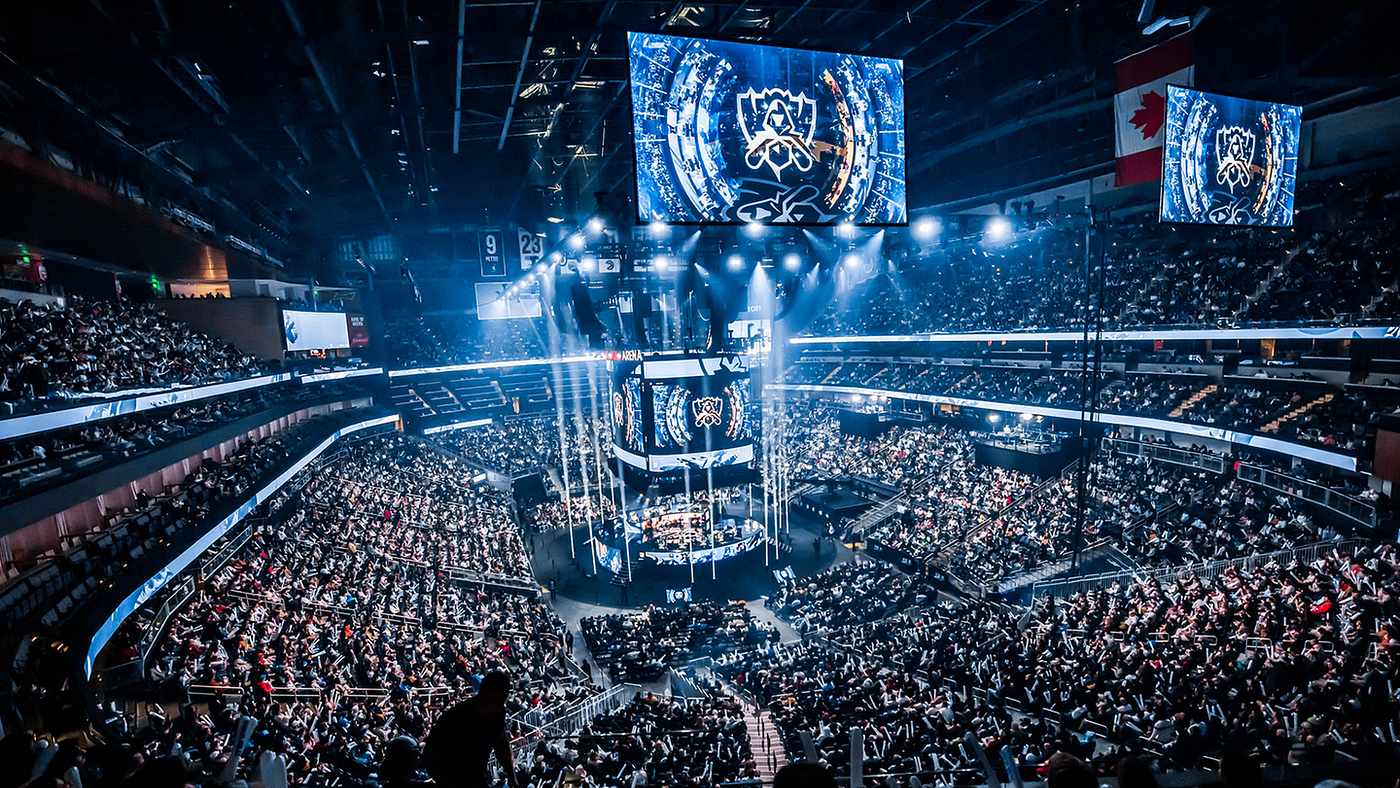
There was a time, not so long ago, when video games were dismissed as a niche pastime for children and teenagers in dark basements. That time is over. Today, the global video game industry generates more revenue annually than the film and music industries combined — a fact that still surprises many people unfamiliar with the scale of transformation that has taken place over the past three decades.
Understanding how this happened is not merely an exercise in nostalgia. It is a study of cultural evolution, technological adoption, and the fundamental human desire to engage, compete, and inhabit other worlds. The story of gaming's rise is, in many ways, the defining media story of the twenty-first century.
The Long Road to Legitimacy
Gaming's journey to cultural dominance was neither smooth nor inevitable. In the 1970s and early 1980s, video games were synonymous with arcades — public spaces that attracted teenagers and sparked moral panics about youth culture. The first home console boom, led by Atari's 2600, planted gaming in living rooms, but the market crashed spectacularly in 1983, nearly destroying the nascent industry entirely. Retailers cleared shelves; investors fled; analysts declared the video game fad dead.
Nintendo's intervention with the NES in 1985 stabilized the market and established quality control standards that protected consumers and rebuilt trust. The company's insistence on licensing agreements — controversial at the time — created a framework that allowed the medium to reassert itself. By the early 1990s, gaming was growing steadily, but it remained firmly outside mainstream cultural conversation.
The pivotal shift began in the mid-1990s. The arrival of Sony's original PlayStation in 1994 and 1995 transformed gaming's demographic profile almost overnight. Where previous consoles had targeted children, Sony marketed the PlayStation to young adults. The hardware supported new disc-based formats that enabled cinematic storytelling. Games like Final Fantasy VII and Metal Gear Solid demonstrated that the medium could deliver complex narratives and emotional experiences previously associated only with film.
The Internet Changes Everything
If the PlayStation era established gaming as a legitimate narrative medium, the internet transformed it into a social one. Online multiplayer gaming — initially primitive, often frustrating, and dependent on expensive dial-up connections — gradually matured through the late 1990s and early 2000s into something remarkable: a new form of social infrastructure.
Massively multiplayer online games like EverQuest and, later, World of Warcraft created persistent worlds that players could inhabit for years. These were not merely games in the traditional sense. They were communities — complete with economies, social hierarchies, friendships, and conflicts that extended far beyond the screen. At its peak, World of Warcraft had over 12 million active subscribers paying monthly fees to participate in a shared digital world. Many of those players formed relationships that outlasted the game itself.
Meanwhile, competitive multiplayer games were quietly building the foundation of what would become esports. Counter-Strike, StarCraft, and Warcraft III attracted dedicated competitive scenes in the early 2000s, particularly in South Korea, where professional gaming received television coverage and players became genuine celebrities. Western audiences largely missed this early chapter, but the seeds had been firmly planted.
"Video games are the first medium that allows the audience to inhabit the experience rather than observe it — and that distinction changes everything about how people relate to the stories they encounter."
Mobile Gaming and the Expansion of the Audience
The launch of the App Store in 2008 and the subsequent explosion of smartphone adoption created a gaming audience that dwarfed anything that had previously existed. Suddenly, the barriers to gaming — expensive hardware, specialized knowledge, significant time investment — were radically lowered. Games like Angry Birds and Candy Crush Saga attracted hundreds of millions of players who would never have considered themselves gamers under any previous definition of the term.
This democratization was genuinely transformative. By the mid-2010s, the majority of people in developed countries played some form of video game, whether they identified with the label or not. The stereotype of the solitary teenage boy in a darkened room was replaced by a reality far more diverse: grandmothers playing casual puzzles, commuters grinding mobile RPGs, families competing in Nintendo Switch party games at the kitchen table.
The Rise of Esports and Streaming Culture
The development of live game streaming — pioneered by Twitch, launched in 2011 — created a new entertainment format that had no direct precedent. Watching other people play games had always existed in informal contexts, but Twitch transformed it into a scalable, monetizable industry. By the early 2020s, Twitch was streaming millions of hours of content daily to audiences that rivaled cable television in some demographics.
Esports grew alongside streaming culture. Games like League of Legends, Dota 2, and Counter-Strike: Global Offensive developed competitive ecosystems with professional leagues, sponsored teams, and prize pools that reached tens of millions of dollars. The 2019 Fortnite World Cup awarded $30 million in total prizes. The 2021 Dota 2 International exceeded $40 million. These figures commanded the attention of sports broadcasters, traditional media companies, and mainstream advertisers who had previously ignored gaming entirely.
Universities began offering esports scholarships. Arena venues were purpose-built for gaming events. The Olympic movement began tentative discussions about competitive gaming's potential inclusion. Whether or not those discussions produce formal recognition, they signal how profoundly the cultural status of gaming has shifted in less than a generation.
Games as Cultural Artifacts
Perhaps the most significant indicator of gaming's mainstream arrival is the way games are now discussed as cultural artifacts rather than mere products. Critical analysis of video games appears in literary publications, academic journals, and mainstream newspapers. Games like The Last of Us, Disco Elysium, and Hades receive the kind of thoughtful engagement previously reserved for literary fiction and prestige cinema.
Adaptations flow in both directions. Gaming IP has spawned successful film and television productions — The Witcher, Arcane, The Last of Us television series — that have introduced gaming properties to audiences who never played the originals. And conversely, major film and music releases routinely generate gaming tie-ins, treating the gaming audience as a primary market rather than a secondary afterthought.
This bidirectional flow of influence represents something new in media history: a medium that began as a subordinate imitator of other forms has become one of their primary creative influences. Game designers now regularly consult on film productions. Cinematographers study game engine lighting. Narrative techniques pioneered in games — non-linear storytelling, player agency, environmental narrative — have begun appearing in experimental television and interactive film.
The Economics of Dominance
The financial figures confirm what the cultural indicators suggest. The global gaming industry was valued at approximately $197 billion in 2022, with projections pointing toward $300 billion by the late 2020s. For context, the global film industry generates roughly $100 billion annually; the recorded music industry, approximately $26 billion. Gaming is not catching up to other entertainment sectors — it has left most of them behind.
This economic weight attracts investment from outside the traditional gaming sector. Technology companies, media conglomerates, and private equity firms have poured billions into gaming acquisitions and infrastructure. Microsoft's attempted acquisition of Activision Blizzard for approximately $69 billion — one of the largest corporate acquisitions in history — illustrated just how strategically important gaming has become to the largest technology companies on earth.
Looking Forward
The trajectory is clear, even if the specific contours of the future are not. Gaming will continue to expand in influence, audience size, and cultural weight. Emerging technologies — virtual reality, augmented reality, cloud gaming, AI-driven procedural content — will reshape what games can be and who can access them. The social functions that gaming currently serves — community building, competitive outlet, storytelling, creative expression — are likely to become more central to daily life, not less.
For those who grew up with gaming, this mainstream arrival can feel vindicating after decades of cultural dismissal. For newcomers discovering the medium, it offers a vast and varied landscape of experiences unlike anything available in any other entertainment form. And for observers trying to understand contemporary culture, understanding gaming is no longer optional — it is essential.
The basement arcades of the 1970s have become billion-dollar arenas. The children who played Pong have become the architects of immersive virtual worlds. And the medium they championed has, quietly and undeniably, become the defining entertainment form of the twenty-first century.